
Integrity Geophysical Services, Inc
40 years seismic experience in Oil, Gas and Environmental Industry

Jerry Blaxton
Founder & President
We provide end-to-end geophysical services—from seismic data processing to advanced interpretation and risk evaluation—supporting energy, infrastructure, and environmental projects.
Our Services
Seismic Data & Analysis
- Full-service 2D/3D Seismic Processing
- Seismic Interpretation
Exploration & Prospecting
- Prospect Generation
- Field Acquisition Supervision
Risk & Specialized Consulting
- CO₂ Sequestration Seismic Evaluation
- Underground Fluid Injection Hazard Evaluation
- Expert Witness Services
Companies We Have Worked With







Methods we use
Fracture-Porosity-Permeability Identification
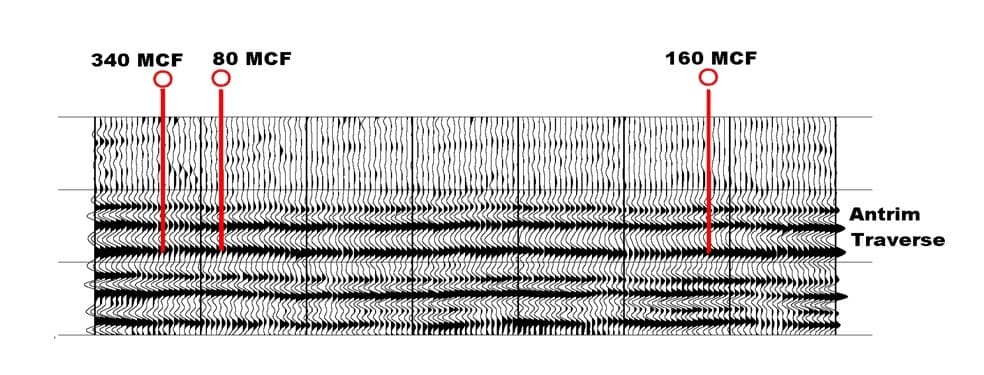
Variations in fracture density, porosity, and permeability directly influence seismic velocity. Zones with enhanced reservoir quality typically exhibit slower seismic velocities compared to tighter rock.
These velocity responses often reveal productive reservoir sweet spots that may be too subtle or too small to consistently impact traditional amplitude or frequency attributes.
By focusing on velocity behavior, this method captures critical reservoir information that conventional seismic interpretation can overlook.
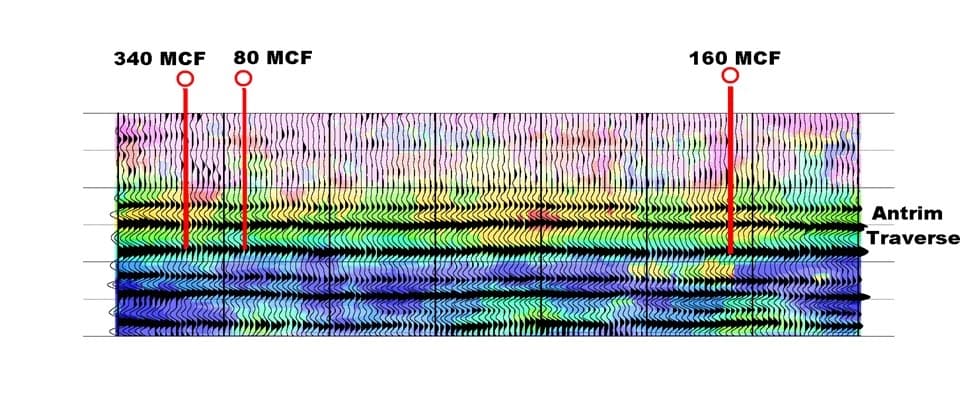
Every CDP and every seismic sample is individually analyzed using high-fidelity processing and detailed velocity modeling.
The final migrated seismic volume is displayed with standard seismic traces in the foreground, while the derived velocity field is color-coded in the background.
Slow velocity anomalies are represented by warm colors, while faster velocities appear as cool colors, enabling rapid visual identification of reservoir quality variations.
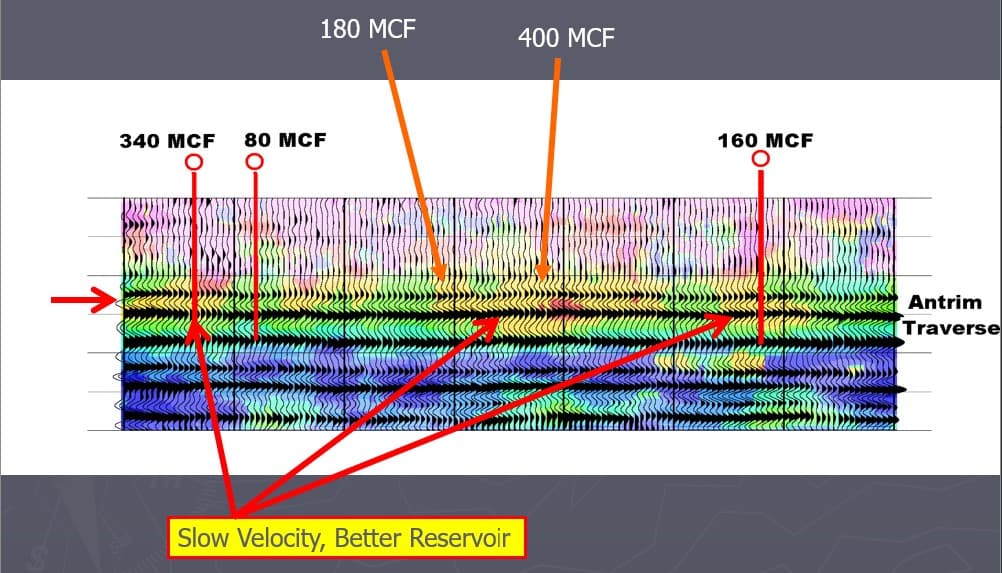
This method demonstrates a strong and repeatable correlation between seismic velocity behavior and reservoir quality.
Drilling into zones identified by favorable velocity signatures consistently leads to above-average production, while tighter, lower-quality reservoir areas can be avoided.
Above-average production results from drilling where the reservoir possesses the best characteristics, while avoiding tighter, lower-quality zones.
Take a look at our