From Seismic Data to Proven Production Gains
Advanced velocity field analysis reveals hidden reservoir potential, guiding precise drilling decisions and significantly increasing production outcomes across complex geological environments.
Devonian Hydrothermal Dolomite
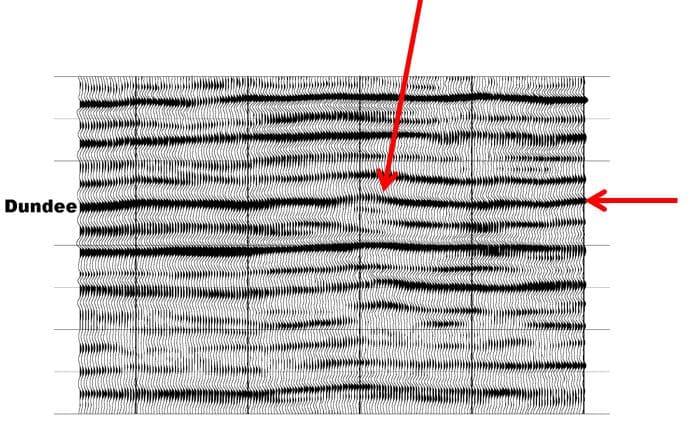
This example is from the North Adams Field, a Strike-Slip / Dolomite Reservoir. The narrow anticline is pretty obvious
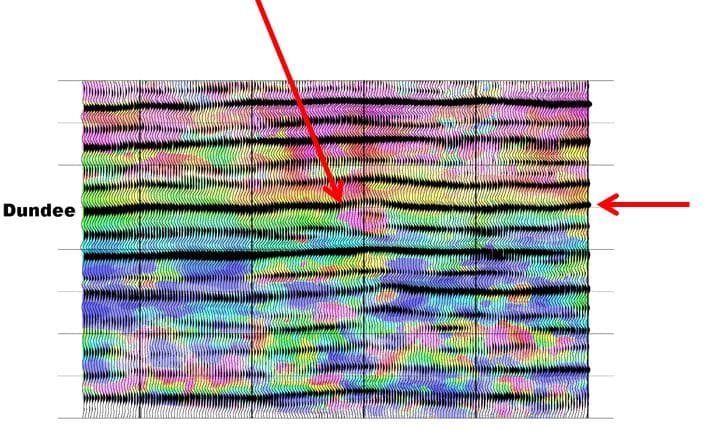
Incorporate the Velocity Field into the Criteria and narrow, one location wide, reservoir is more obvious
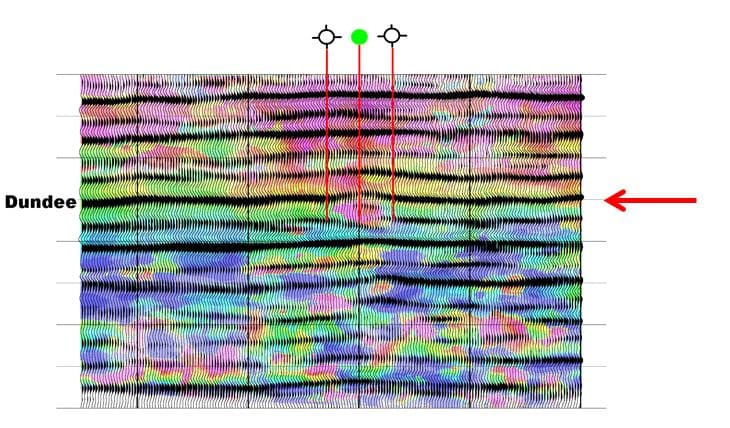
Final Results
Richfield Production
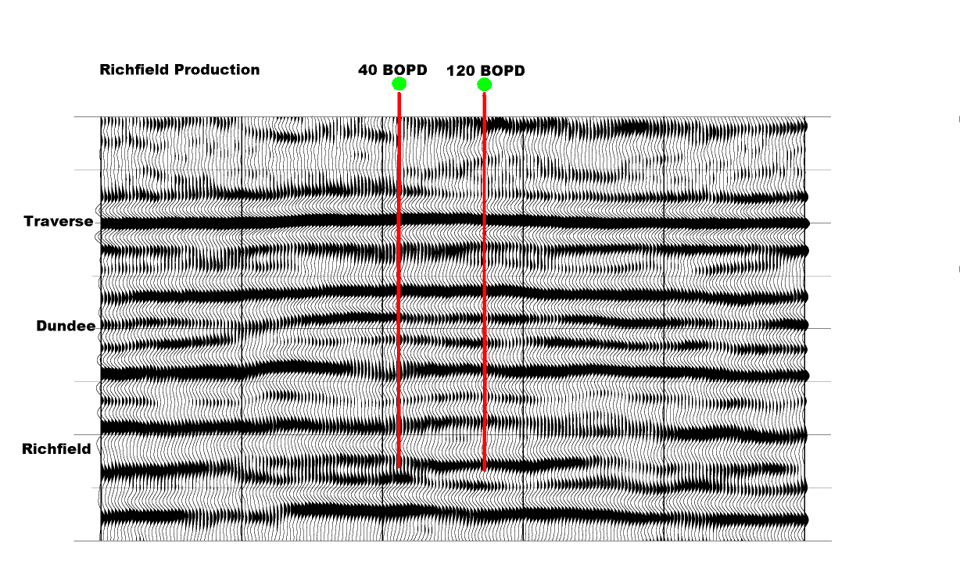
Varying rates of production without obvious Anomalous Conditions of Distinguish or Predict.
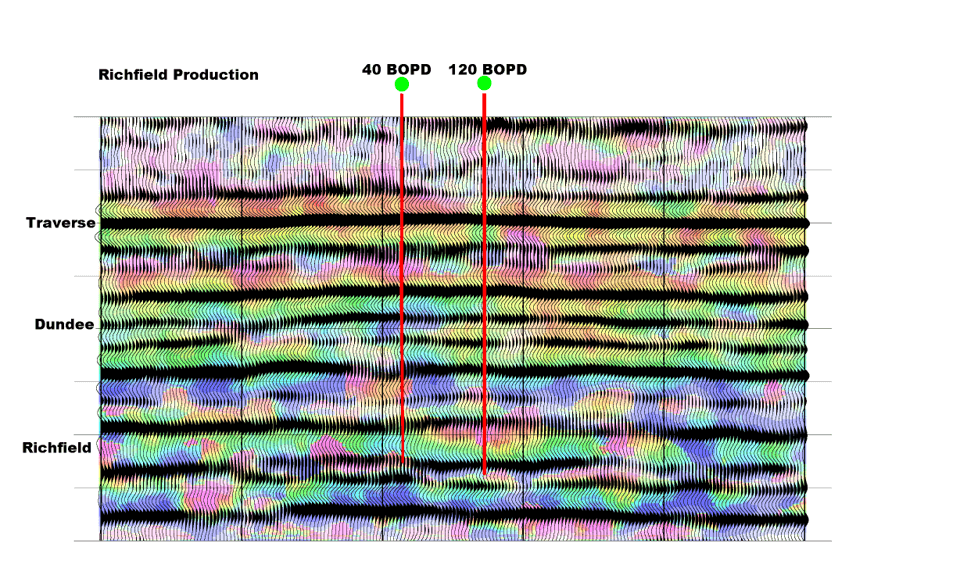
Incorporate the velocity field and slow velocity anomalies associated with better reservoir are evident.
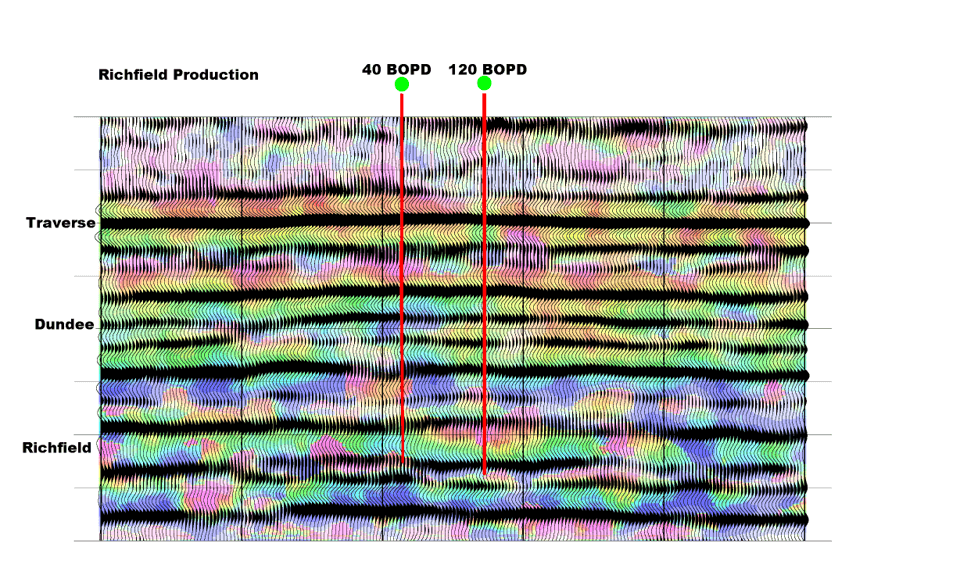
The 120 BOPD well location was based on this velocity analysis, achieving a 300% increase in daily production.
Azimuthal Anisotropy
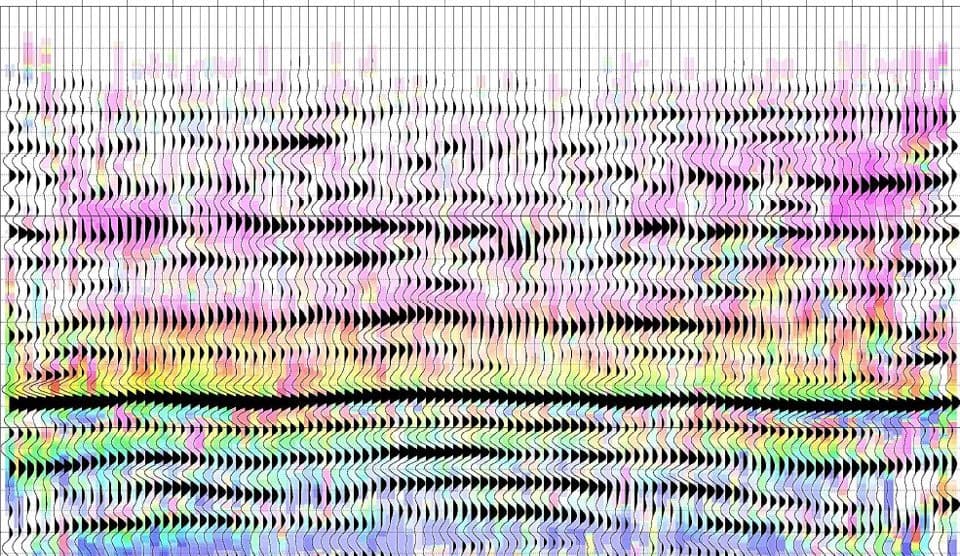
2D extraction from 3D data, all azimuths used for velocity calculation. No clear anomaly evident for this carbonate reservoir producing 100 BOPD.
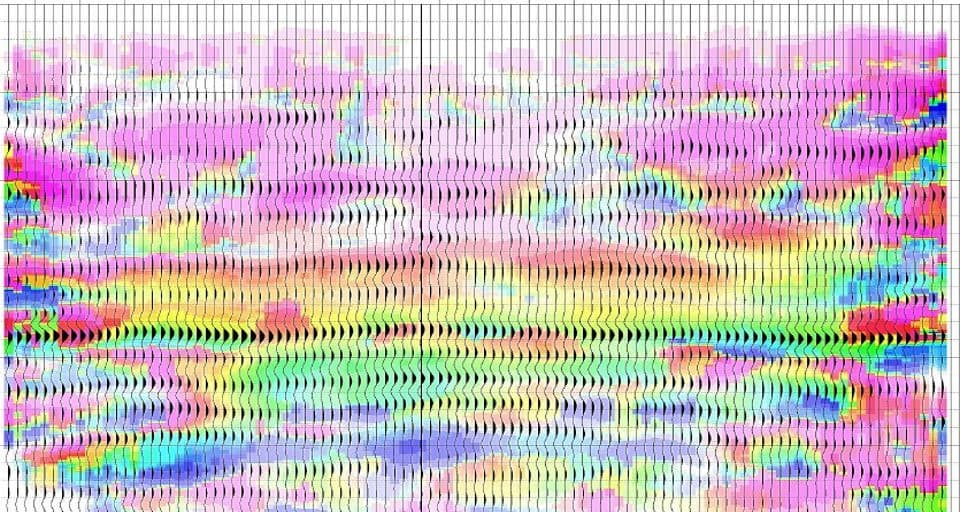
By segregating the N-S azimuth ray paths to calculate velocity, a more precise velocity calculation is made. Now, a clear slow velocity anomaly is present and obvious. The slow velocity represents better reservoir, hence 100 BODP.
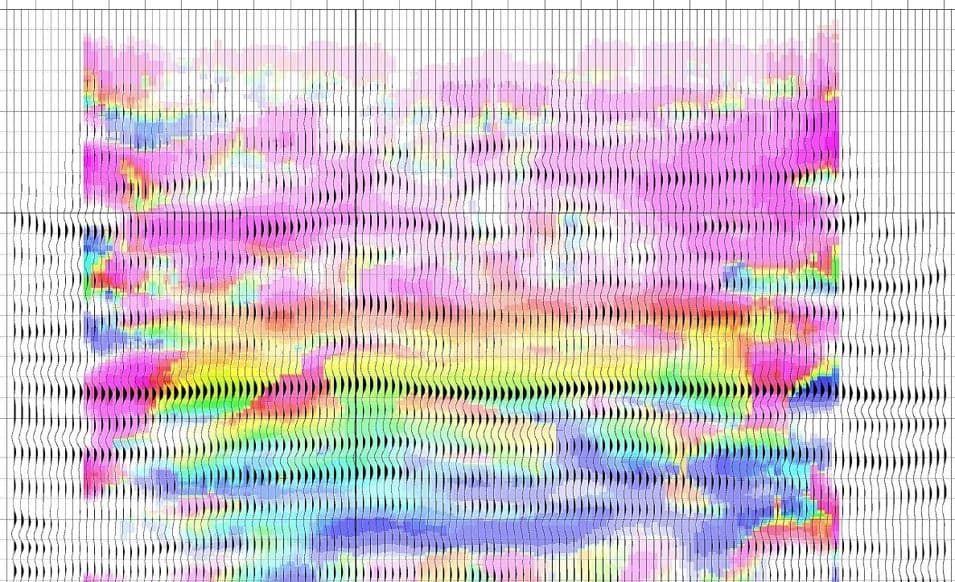
Shifting the drill site 500-700 feet will enable a drill bit to encounter much better reservoir characteristics, possibly finding 100 BOPD, increasing daily production 500%.